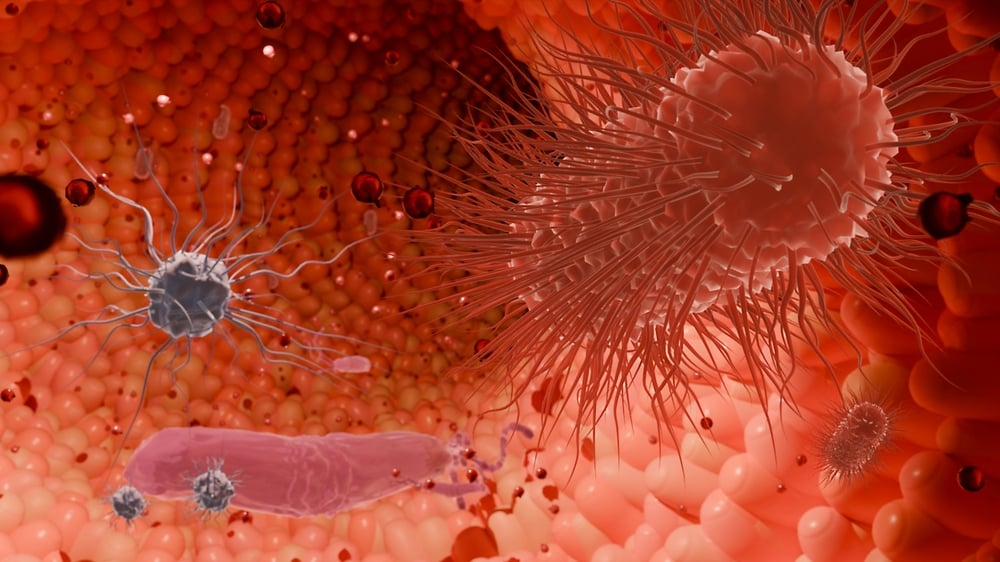
Millions of people in the U.S. have food allergies, which can cause life-threatening symptoms. Growing evidence suggests the microbes, or microbiota, living in the digestive system influence food allergies. These microbes are collectively known as the gut microbiome.
A procedure called fecal microbiota transplantation can change the gut microbiome by transferring gut microbes from one person to another. But it’s unclear whether that approach could curb food allergies.
An NIH-funded research team led by Drs. Rima Rachid and Talal Chatila of Boston Children’s Hospital tested whether fecal microbiome transplants could safely treat food allergies. The study was published in Science Translational Medicine on August 5, 2026.
The clinical trial involved testing the treatment in 15 people with peanut allergies. The participants took pills that contained gut microbes from people without food allergies. Five of the participants also received antibiotics before the treatment to clear out their gut microbes so new ones could more easily settle in. The treatment didn’t cause any serious side effects.
In three of the ten participants who did not receive antibiotics, the treatment increased how much peanut they could safely eat four months later without having an allergic reaction. It had the same effect in three of the five participants given antibiotics.
The transplant’s benefits were linked to changes in immune cells called T cells that take part in allergic reactions. When the transplant was effective, regulatory T cells that make a protein called RORγt became more abundant for up to a year. Meanwhile, levels of a different type of T cell fell in the first month but then recovered.
The researchers then transplanted gut microbes from the participants to mice without microbiomes. Gut microbes from people who responded to the treatment protected the mice against food allergies. And those mice showed similar immune cell changes to the human participants.
Mice who received transplants from people who responded to the treatment had more bacteria called Bacteroides in their gut microbiomes. Giving those bacteria to mice without microbiomes protected them from developing food allergies. The bacteria also boosted the mice’s levels of regulatory T cells that make RORγt.
These effects were partly due to the bacteria’s ability to break down substances made in the liver called bile acids. When a participant’s transplant was effective, it boosted their blood levels of molecules produced from breaking down bile acids. And Bacteroides bacteria that could not break down bile acids did not protect mice from food allergies or change their T cells.
The results suggest that fecal microbiome transplants may provide long-lasting protection from food allergies. However, larger clinical trials are needed before they can be used widely as a treatment.
“Larger studies of fecal microbiota transplantation are now essential to confirm these findings, identify the patients most likely to benefit, and discover beneficial bacteria that could be developed into targeted probiotic therapies for food allergy,” Rachid says.
We use cookies to ensure that we give you the best experience on our website. If you continue to use this site we will assume that you are happy with it.