

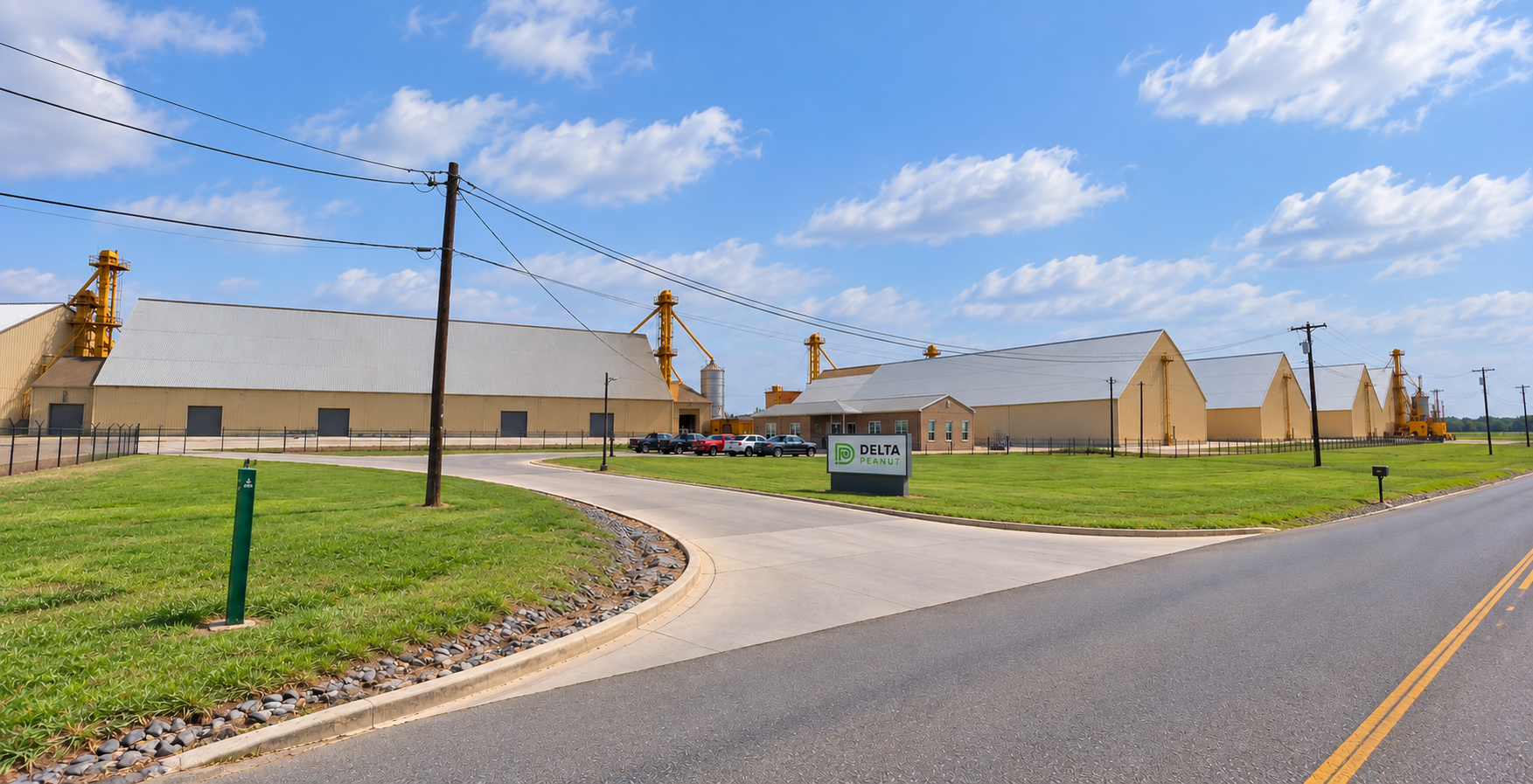
The collapse of Delta Peanut threatened farmers, families and an agricultural industry built across the Mid-South
A chronological feature on the 2026 Delta Peanut crisis
For peanut farmers across Arkansas and southeast Missouri, September is supposed to be a season of anticipation.
Months of planting, irrigation, spraying and watching the weather finally lead to harvest. Combines and peanut diggers move into the fields. Trucks begin rolling. A year’s worth of work starts turning into a crop that can be sold.
But in September 2026, the harvest brought something entirely different: fear.
Within a matter of days, farmers who had hundreds of thousands – and in some cases potentially millions – of dollars invested in their crops were confronted with a frightening possibility: they might have peanuts ready to harvest, but nowhere to take them.
At the center of the crisis was Delta Peanut, the farmer-owned shelling and storage operation in Jonesboro, Arkansas, that had become an important piece of the Mid-South peanut industry. What began as a financial crisis inside one company quickly spread across farm fields, families and communities. And the clock was ticking.
The Announcement That Changed Everything
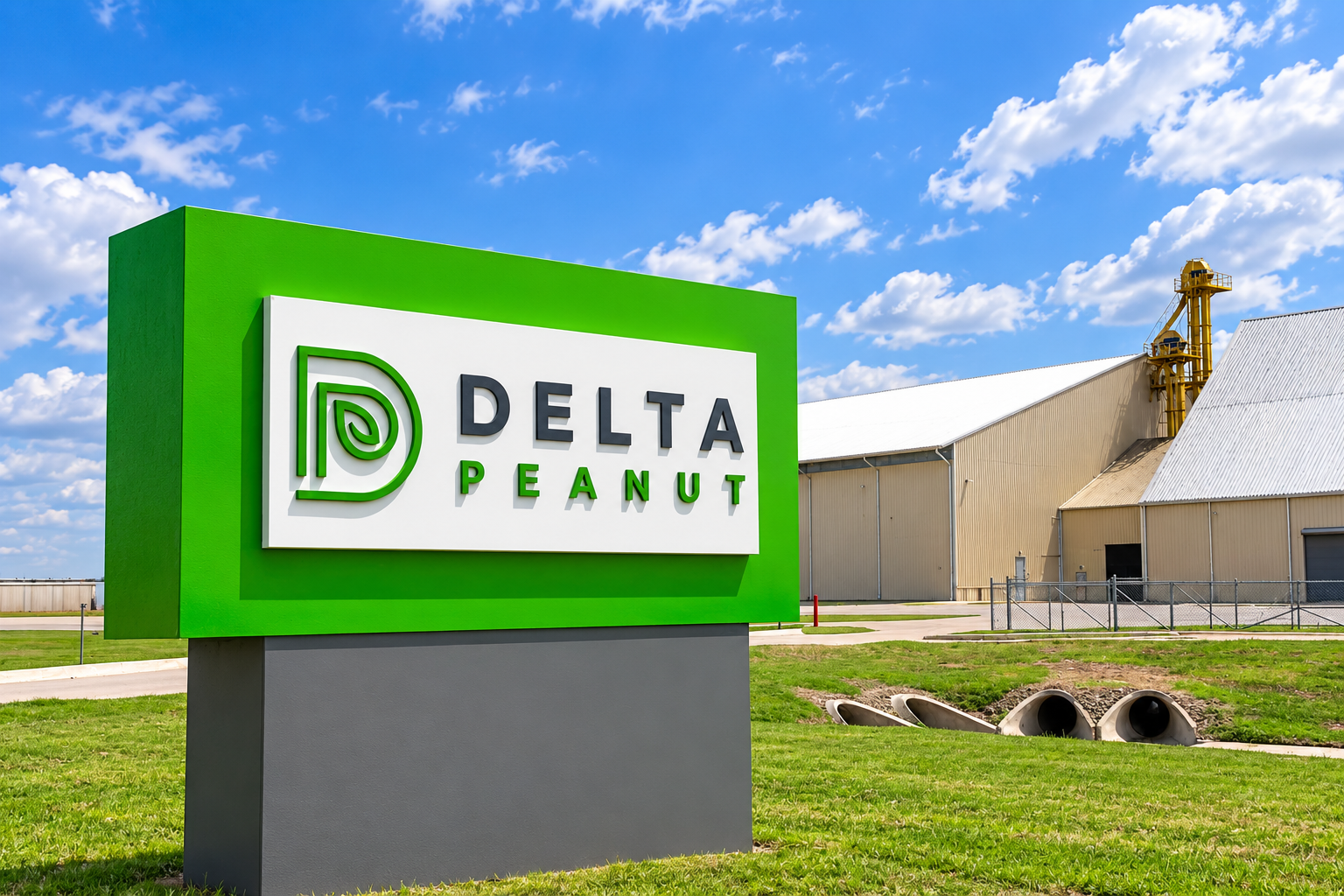
The first shock came in early September. Delta Peanut informed its members and growers that the Jonesboro operation would permanently close. The U.S. Department of Agriculture had deregistered the facility after its federal warehouse bond was pulled, while the company told growers that funding problems were forcing it to wind down operations.
Then came another blow. A WARN notice indicated that approximately 120 employees would be affected, with layoffs beginning around October 10 – directly in the middle of peanut harvest.
These were not simply numbers on an employment report. They represented workers with families, mortgages, car payments, grocery bills and children. They represented paychecks being spent at restaurants, stores, gas stations and other businesses around Jonesboro. And they represented the people operating an agricultural facility that farmers depended upon to move their crop from the field into the marketplace.
Delta Peanut had opened only a few years earlier with enormous promise. Built on 71 acres in the Craighead County Technology Park, the Jonesboro facility was capable of shelling more than 180,000 tons of peanuts annually at maximum capacity. The company reported approximately 60,000 tons of storage capacity in Jonesboro, with additional peanuts handled through partner buying points.
The facility had helped create something that barely existed before: a significant Mid-South peanut infrastructure. Before Delta Peanut opened, peanuts grown in the region often had to travel hundreds of miles to traditional peanut-producing areas for shelling. The Jonesboro plant was expected to change that equation and help establish peanuts as another viable crop for Mid-South farmers. Farmers invested in that future. Then, almost overnight, the foundation beneath it began to disappear.
A Harvest With No Home
The consequences became painfully clear in southeast Missouri. Thousands of acres of peanuts were approaching harvest in the Bootheel when growers learned that Delta Peanut’s shutdown included the loss of a critical outlet for their crop. Delta operated a major storage warehouse in Kennett, Missouri.
Without the federally bonded storage and processing system they had expected to use, farmers suddenly faced a devastating question: Where do you put thousands of tons of peanuts when harvest begins?
Federal and state requirements mean commercial peanuts must be properly dried, inspected and stored in federally bonded facilities before entering the marketplace. The remaining nearby facilities did not have enough capacity to simply absorb Delta Peanut’s growers. For some Missouri farmers, one of the alternatives was hauling peanuts hundreds of miles to Georgia.
Consider what that means on a farm. A producer has already paid for seed, fertilizer, crop protection products, fuel, equipment, labor, land, irrigation, interest and months of operating expenses. The farmer has carried those costs through the entire growing season believing that harvest would finally provide the revenue needed to pay those bills. Then the farmer discovers that the crop may have no nearby place to go.
Moving peanuts hundreds of miles adds trucking, fuel, labor and logistical expenses at exactly the moment when farm finances are already stretched. Leaving them in the field is not much better. Peanuts cannot simply wait indefinitely underground. As the harvest window closes, yields and quality can deteriorate. Once peanuts are dug and exposed, heavy fall rains or freezing temperatures can turn an already difficult situation into disaster.
One southeast Missouri producer described managing more than 1,000 acres of peanuts ready for harvest while searching for somewhere to put them. Growers warned that without a solution, some family farms could be pushed out of business. This was no longer simply Delta Peanut’s financial problem. It had become a race against time.
Nearly 90 Growers Caught in the Crisis
The magnitude of the problem continued to emerge. Nearly 90 growers were contracted to produce peanuts associated with the Jonesboro operation. Arkansas had only one other federally bonded peanut warehouse available, and that facility was already operating at capacity. Transporting the crop hundreds of miles out of state was financially unrealistic for many producers.
For farmers, the cruelest part was the timing. The money had already been spent. The crop had already been grown. The peanuts were sitting beneath the soil. A farmer could look across a field and see a good crop – perhaps one of the best crops he had grown – and still face financial disaster because the infrastructure required to handle that crop had disappeared.
The crisis also threatened something larger than individual farms. Peanuts had become an expanding agricultural opportunity in Arkansas and the Missouri Bootheel. Delta Peanut itself was created by farmers who believed enough in that opportunity to invest their own money in building a regional shelling and storage system.
Its closure threatened to reverse years of development. Without dependable storage, shelling and marketing infrastructure, farmers would have to ask whether planting peanuts again was worth the risk. That decision would ripple far beyond the farm: fewer peanut acres mean fewer loads for truckers, less fuel purchased from local suppliers, less equipment being repaired, less seed and crop protection product being purchased, and less money circulating through rural communities. The collapse of one agricultural facility can travel down Main Street faster than many people realize.
September 22: The Closure Becomes Reality
By September 22, reports confirmed that Delta Peanut’s Jonesboro shelling and storage operation was closing. The farmer-owned business that had been built to serve a growing regional peanut industry was shutting down, leaving growers searching for processing and storage alternatives.
For farmers, every passing day mattered. Harvest does not wait for bankers. It does not wait for lawyers. It does not wait for negotiations. And it does not wait for government. A mature peanut crop keeps moving toward the point where weather and time begin taking money away from the farmer. Something had to happen quickly.
September 24: A $5 Million Lifeline
 Then came the first major break in the crisis. On September 24, Arkansas Gov. Sarah Huckabee Sanders announced that $5 million from the Governor’s Quick Action Closing Fund would be provided as a short-term bridge loan to help Delta Peanut purchase and handle the 2026 peanut harvest.

The money was intended for operating expenses including staffing, utilities and overhead necessary to move the crop through the facility. Growers participating in the arrangement were required to agree to a $60-per-ton delivery fee and a bank subordination agreement giving the state priority lender status for repayment of the operating loan. The loan was not to exceed six months.
The state intervention followed another critical financial development: Delta Peanut had obtained a $2.7 million line of credit, allowing USDA to reinstate its warehouse license. But additional operating money was still needed to actually process the harvest. The $5 million bridge loan was designed to provide that breathing room.
The intervention could help save a large share of Arkansas’ peanut crop tied to the situation and give farmers a pathway to get peanuts out of their fields rather than watch an entire season’s investment deteriorate. But the intervention did not erase what happened. Employees still faced the consequences of Delta Peanut’s financial crisis. Farmers endured weeks of uncertainty over whether the crop they had spent an entire season producing would have a marketable home. Missouri growers were also caught in the disruption.
Reports also indicated that Delta Peanut was negotiating with a third party that could purchase the company and assume operations after the 2026 harvest. That possibility could help determine the long-term future of the Mid-South’s young peanut industry.
When Leadership Refused to Let the Industry Fail
For several frightening weeks, the Delta Peanut story appeared headed toward an ending nobody in agriculture wanted to see.
Farmers had crops in the ground and nowhere to take them. Nearly 90 growers had been told Delta Peanut could not dry, process or store their harvest. Arkansas’ only other federally bonded peanut warehouse was already operating at capacity. The possibility of moving thousands of tons of peanuts hundreds of miles away threatened to make an already difficult situation financially impossible for many growers.
Behind those farmers were families. Behind Delta Peanut were employees and their families. And surrounding all of them were the truckers, agricultural suppliers, equipment dealers, lenders and small businesses that depend upon agriculture to keep money moving through rural communities.
The consequences of failure would not have stopped at Delta Peanut’s front gate. But neither did the effort to find a solution.
Instead of accepting the collapse of an industry that farmers had spent years building, Delta Peanut’s leadership continued working to secure financing, restore the company’s ability to handle the crop and pursue a potential sale that could provide a path forward.
That persistence produced an important breakthrough. Delta Peanut obtained a $2.7 million line of credit that allowed USDA to reinstate its warehouse license. The company also entered negotiations with a third party that could purchase Delta Peanut and transfer operations after the 2026 harvest.
But there was still one enormous problem: the company needed money to operate now.
That is when Arkansas Gov. Sarah Huckabee Sanders and state agricultural officials stepped in. Sanders announced a $5 million short-term bridge loan from the Governor’s Quick Action Closing Fund to provide Delta Peanut with operating capital for staff, utilities and overhead so the company could purchase and process the 2026 harvest.
Arkansas Agriculture Secretary Wes Ward said the action was expected to save nearly 80 percent of the state’s peanut crop and help keep several farmers from being forced out of business. The bridge loan is limited to six months and is to be repaid as USDA payments and delivery fees are received.
What had looked only days earlier like the possible collapse of a regional peanut infrastructure suddenly had a pathway forward.
It was not simply a government loan. It was time – time for farmers to harvest their peanuts, time for Delta Peanut to operate, time for employees to keep working during a critical harvest, and time for negotiations with a potential new owner to continue.
The final chapter has not yet been written. The bridge loan must be repaid, and Delta Peanut is still working toward an acquisition by an outside firm. But the immediate intervention changed the outlook for the 2026 harvest.
A crop that faced the possibility of being stranded in the field now has a route toward harvest. Farmers who feared that one season could threaten the future of their operations have been given another opportunity to keep farming. An agricultural processing system that appeared ready to shut down has been given the ability to operate through harvest.
The events of September also showed what can happen when company leaders, farmers and state officials work toward the same urgent goal. Delta Peanut’s leadership kept searching for financing and a longer-term solution. Governor Sanders’ administration supplied a financial bridge at a critical moment. Farmers kept preparing to harvest despite weeks of uncertainty.
For the families whose livelihoods depend on the peanut industry, the result is more than a financial transaction. It is a chance to preserve farms, protect jobs through the harvest, keep money moving through rural communities and give the Mid-South peanut industry an opportunity to continue.
What began with the possibility of peanuts being left in the field now ends, at least for this harvest, with those peanuts having a pathway to market. What began with fear of losing farms now carries the possibility of keeping growers in business. And what began as a story about the possible disappearance of Delta Peanut has become a story about people working together to preserve an industry.
For those farm families, employees and communities, that may be the most important harvest of all.
Sources
-
Mix 106.3 / Jonesboro Right Now – “Delta Peanut facility in Jonesboro to close in October.”
-
KFVS12 – September 14, 2026 – “With nowhere to store crops, southeast Missouri peanut farmers race against clock.”
-
Arkansas Democrat-Gazette / Arkansas Online – September 22, 2026 – coverage of Delta Peanut’s Jonesboro shelling and storage facility.
-
Northwest Arkansas Democrat-Gazette / NWA Online – September 24, 2026 – coverage of the $5 million Governor’s Quick Action Closing Fund offer.
