N.C. Research On Peanuts Helps Farmers Continue Profitable Production
BRANDON HERRING
RALEIGH, NORTH CAROLINA
When it comes to research related to peanuts in North Carolina, there’s a lot of ongoing work and not a lot being left out. That’s at least the viewpoint of Ivy Lanier who is the superintendent of the Peanut Belt Research Station, which is one of 18 research stations the N.C. Department of Agriculture operates in conjunction with N.C. State University.
The Peanut Belt station in Lewiston Woodville hosts several research projects, and Lanier says that research ultimately helps peanut farmers and the peanut industry – making North Carolina the third-highest state in U.S. peanut production.
“Putting our emphasis in peanuts that’s a number-three crop in the nation is a win-win for everybody, and it’s got to be a win for our farmers,” Lanier said. “We’ve got to be able to do the stuff our farmers aren’t able to do so that we can keep them ahead of the ballgame.”
Lanier breaks down the many different types of research into these four categories:
• Breeding trials
• Agronomic trials
• Disease trials
• Entomology trials
Breeding trials are where a lot of research is centered, Lanier said, and much of the breeding is aimed at increasing yields and/or resisting disease. The station has seed-increase plots, seed-increase nurseries, disease-resistance plots, insect-resistance plots and variety trials, which shows that breeding for new high-yield varieties often overlaps with other interests like testing for disease or pest resistance or the planting and harvesting timeline of the varieties.
Lanier said researchers can work for many years in labs and greenhouses to develop new varieties that have certain desirable characteristics, and once they’ve refined those qualities into a variety, they’ll plant a few in a field on the research station to multiply their seed stock. Then they’ll repeat the planting the next season to increase their stock more.
“You’re looking at four or five years just to get where we’re at, to be able to even think about commercial release of a variety, and that doesn’t include the time that they put into breeding it before the field trials,” Lanier said.
An example is the Bailey II peanut. Researchers first developed a Bailey variety, and then researchers found a way to improve it more, which resulted in the Bailey II that is now a popular variety for North Carolina peanut farmers.
Agronomic trials can be official variety trials, or they may test planting dates (early vs. late) or planting methods such as whether single row or twin row planting produces better results. Testing the effectiveness or application practices of peanut inoculants would also fall into the agronomic trials category. (Inoculants can help with growth while reducing fungus or root rot.)
Many times the trials involve multiple plantings on the research station and across multiple counties. Official variety trials test the yield of several different varieties to see how each variety performs each year, helping farmers determine which variety to plant.
“It’s to really help farmers see that the yields are there, kind of what they can expect on their farm in the coastal plain or the northeast or the southeast or whatever counties they’re in,” Lanier said.”
For other types of agronomic trials like testing twin row methods, the goal is to see what planting methods or other factors may produce better peanut crops.
“It’s to see if you can get a yield increase. Is it worth the extra expense? Is it worth the time?” Lanier explained. “For example, depending on which part of the country you’re in, I think twin row planting is bigger in some areas than it is others, but you know, that’s important to the farmer. [They want to know] ‘do I go twin rows? If I go twin rows, is it going to cost me money, and will I get a yield increase?’ So that’s kind of the reason we do it.”
Other agronomic trials aim to answer similar questions. Essentially, will planting, growing or harvesting any particular way produce the best results? The research is helping figure out the answers.
Disease trials may be a bit self-explanatory. They look at application timing of fungicides, application rates, new fungicides, how well fungicides work on different diseases and so forth.
Lanier said some research tests whether disease prevention applications should begin in July or August, for example, or whether six applications are sufficient for a season or whether eight applications are shown to work significantly better.
“Are we better off to have that fungicide in the plant a little bit quicker to stave off some [disease]?” Lanier asked, as he provided examples of questions some disease trials aim to answer. “What is the best fungicide to spray and the timing of application? And does this fungicide go before the next one?”
Lanier explained that peanuts benefit from multiple applications throughout the season, so in addition to figuring out which order to apply the different options, some disease trials also aim to figure out the optimal timing between applications. Others may look at the amount of fungicide that is needed to prevent or treat problems that could destroy a peanut crop.
Entomology trials focus on bugs or other pests that could eat up a crop and dramatically reduce yields. Some pesticides have been eliminated from use because of regulations while others have become less effective.
So entomology trials aim to figure out which pesticides are current options for effectiveness. They examine whether the peanuts seeds benefit from being pre-treated with an insecticide or what the best method of application may be to target harmful insects. Again, Lanier offered up some examples of questions that the research tries to answer:
“If we have an industry standard but now a new option has been introduced, is it as good as the current standard? Is it better than that? Is the price break okay? If it’s a lot more money, does it do a good enough job to say, hey, this one’s better than that one?” Lanier said. “And they’ll do it across different varieties. You know, a lot of it’s also based on varieties and treating them the same. And rates as well. Do we put five pounds out or can we get by with four or three or two? For the ones that we’ve been using, are they still working as good as we hope they work – is it still working or still better than the new one?”
Ultimately, the research aims to figure out the best options for growing peanuts – doing the testing so that farmers don’t have to experiment themselves, which could waste their money and time.
“These are the nuts and bolts that keep our peanuts safe and keep North Carolina ranked third in U.S. peanut production,” Lanier said. “If we can keep production up, that’s pretty good for the amount of acres we have in eastern North Carolina producing peanuts.
“I think the future is bright for peanuts. I think they’re putting a lot of emphasis on peanuts, and I think the next steps will be good. Even just last week we were doing some shelling, and some of the varieties that they’re looking at are getting good numbers [for yield]. So we’ll see what the future holds, and in the next couple of years we may even have new varieties coming out.” ∆
BRANDON HERRING
NORTH CAROLINA STATE UNIVERSITY
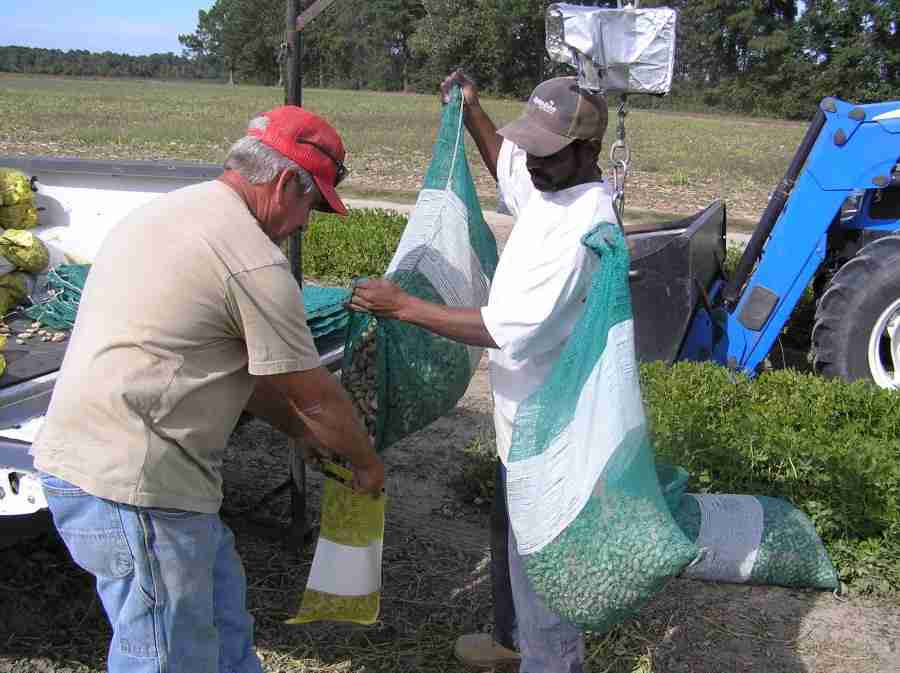
Peanuts from breeding trials at the Peanut Belt Research Station are harvested, bagged and tagged.
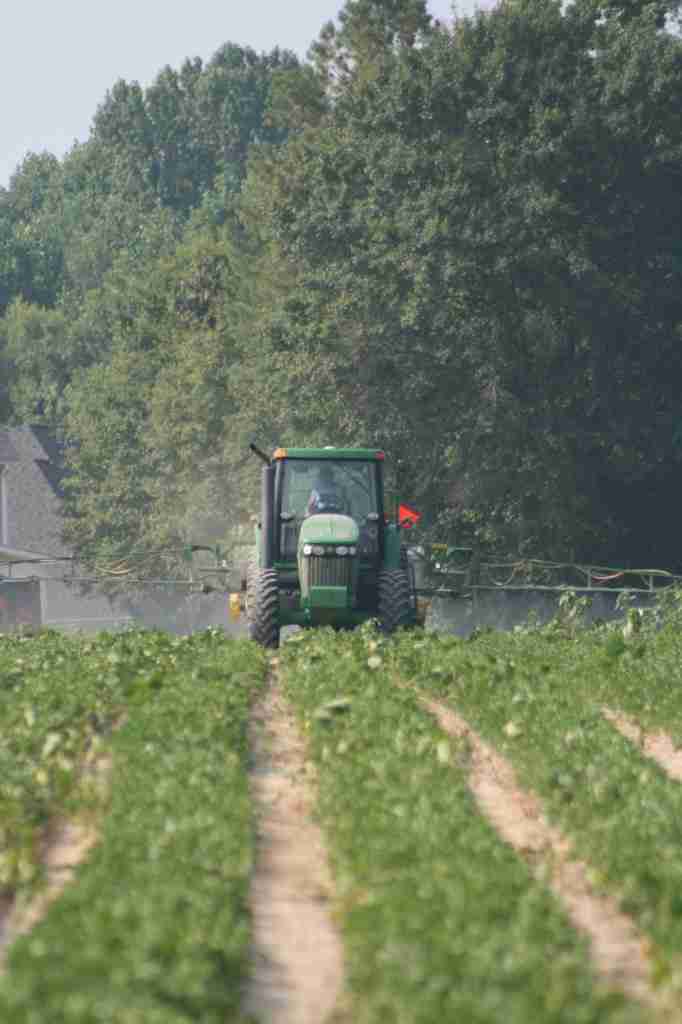
A farmer sprays one of his peanut fields.
Link to Original Article: https://blog.ncagr.gov/2025/01/31/n-c-research-on-peanuts-helps-farmers-continue-profitable-production/
We use cookies to ensure that we give you the best experience on our website. If you continue to use this site we will assume that you are happy with it.