
Tuesday, September 29, 2026

New peanut genome map uncovers hidden gene, boosts dense-planting yields 20%  
by Murdoch University

edited by Gaby Clark, reviewed by Andrew Zinin

An international team that includes researchers from Murdoch University’s Centre for Crop and Food Innovation (CCFI) has built the most comprehensive genetic map of the peanut yet and used this new genomic resource to breed a higher-yielding dwarf peanut line.

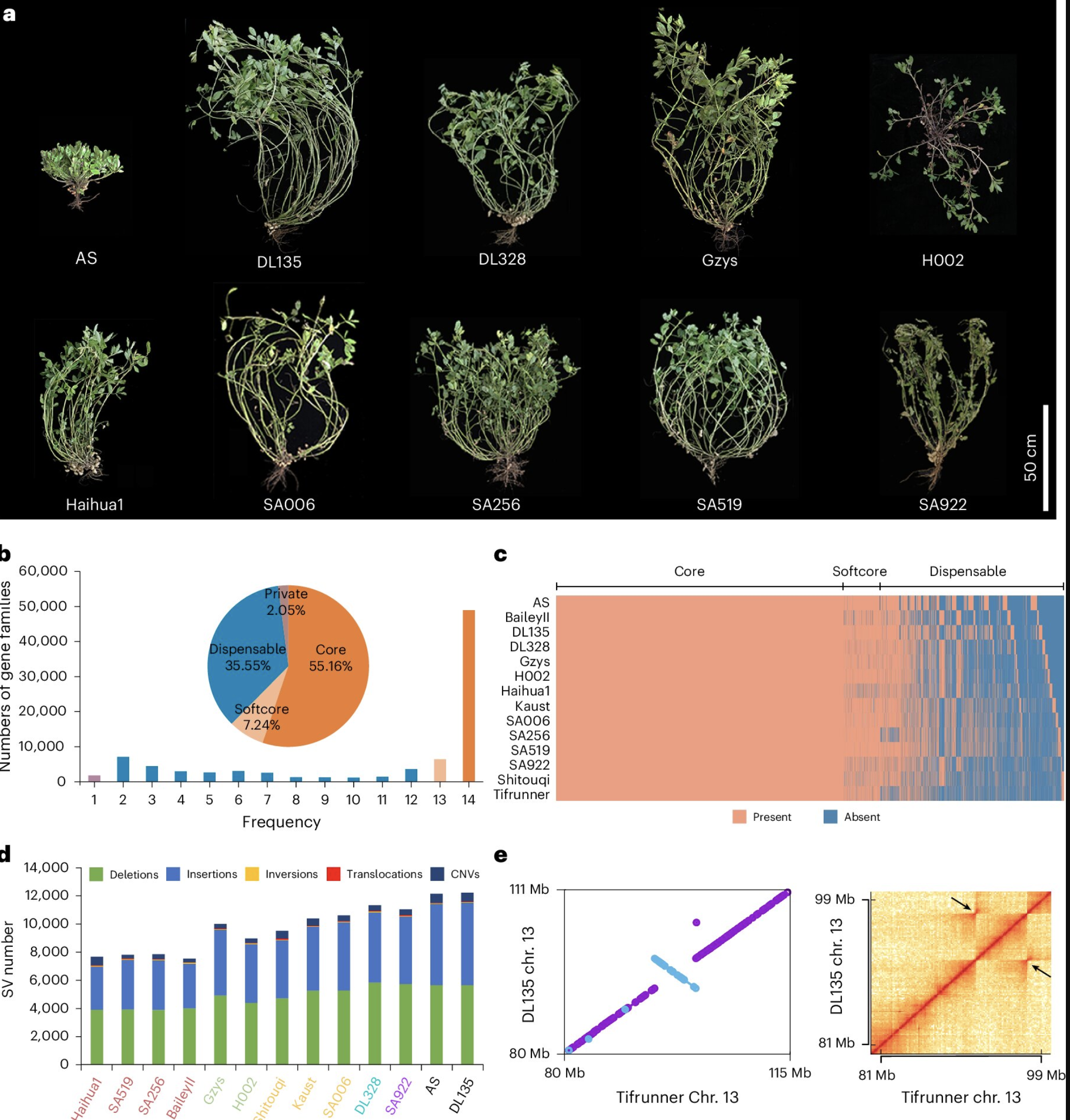
Led by the Shandong Academy of Agricultural Sciences in China and in collaboration with Murdoch University’s Centre for Crop and Food Innovation, the International Crops Research Institute for the Semi-Arid Tropics (ICRISAT), Guangxi Academy of Agricultural Sciences, the Chinese Academy of Agricultural Sciences and the Henan Academy of Agricultural Sciences, the research team developed a graph-based pan-genome for cultivated peanut and used it to resequence 2,320 accessions from 87 countries and regions. Their findings were published in Nature Genetics.

Peanuts feed hundreds of millions of people and are a critical source of protein and cooking oil in South Asia and Africa. However, severe genetic bottlenecks during peanut evolution and domestication have resulted in narrow genetic diversity, long hindering crop improvement efforts.

Mapping peanut genetic diversity

To resolve this challenge, the research team assembled 10 new reference-quality genomes and combined them with four published assemblies, covering all six botanical varieties of cultivated peanut. They then sequenced the DNA of 2,320 peanut accessions collected from 87 countries and regions using the new reference. The panel covers most of ICRISAT’s core germplasm collection and well over half of the USDA’s, representing the genetic breadth of the world’s two largest peanut germplasm holdings.

The researchers uncovered two important genes. The first controls where flowers are produced, which determines the shape of the plant and how its pods are set. The second sits inside a large chromosome segment that had physically swapped positions with another chromosome—the reason it had escaped detection in previous sequencing efforts.

A dwarf line boosts yield

The researchers found that silencing this gene reduced plant height and internode length, opening up opportunities to develop dwarf varieties. Using the new map, the researchers crossed a naturally dwarf peanut with a high-yielding Chinese variety and selected offspring carrying the best combination of genes. The resulting line, LuAi-1, is roughly half the height of the parent variety but yielded around 20% more in the team’s field trials when planted densely.

In a statement, CCFI Director and co-corresponding author of the study Professor Rajeev Varshney FRS FAA explained, “The development of semi-dwarf wheat and rice varieties drove the Green Revolution and saved the lives of millions of people across the world, because compact plants tend to be sturdier, can be grown closer together on smaller plots, and are easier to harvest by machine. However, peanuts have never had an equivalent. This research demonstrates that it’s not only possible to develop dwarf varieties, it’s possible to dramatically enhance peanut yield.”

Potential for smallholder farmers

Pro-Vice Chancellor and Director of the Food Futures Institute Professor Peter Davies added, “This research project has direct implications for millions of smallholder farmers in Africa and Asia, where every yield increase paves the way toward more food-secure outcomes. The Centre for Crop and Food Innovation continues to be a global leader in the development of pangenome resources, and it is fantastic to see the Centre contribute to research at this scale and of this importance.”

Murdoch University Deputy Vice Chancellor for Research and Innovation Professor Peter Eastwood said, “This paper encapsulates Murdoch University’s approach to science, which is to deliver translational and collaborative research that benefits both people and the planet. Peanuts may have a relatively small market share in Australia; however, globally they are a critically important crop. My congratulations to all the authors for developing a new resource that will accelerate and improve peanut breeding.”

Link to Original Articles: https://phys.org/news/2026-09-peanut-genome-uncovers-hidden-gene.html

: https://www.murdoch.edu.au/news/articles/global-peanut-pan-genome-unlocks-hidden-variation-and-delivers-new-high-yielding-dwarf-line

Related Articles

Quick Links

E-News Sign-Up

Connect with Peanut Grower